
Access Branford Court Records
Branford court records can be searched through the Connecticut Judicial Branch online system. All cases from Branford get filed at Geographical Area No. 23 in New Haven for criminal matters or at New Haven Judicial District for civil and family cases. The state runs a unified court system that serves all Connecticut towns with no local municipal courts. Residents can look up court records from home using the free case search portal. Most records are public and can be viewed by anyone. Go to the courthouse to get full case files or certified copies of court documents from Branford cases.
Branford Court System
New Haven County Court Locations
Branford is part of New Haven County. Criminal and motor vehicle cases from Branford are filed at Geographical Area No. 23 in New Haven. This courthouse is at 121 Elm Street, New Haven, CT 06510. The clerk's office phone is (203) 789-7461. This location serves Bethany, Branford, East Haven, Guilford, Madison, New Haven, North Branford, and Woodbridge for criminal cases.
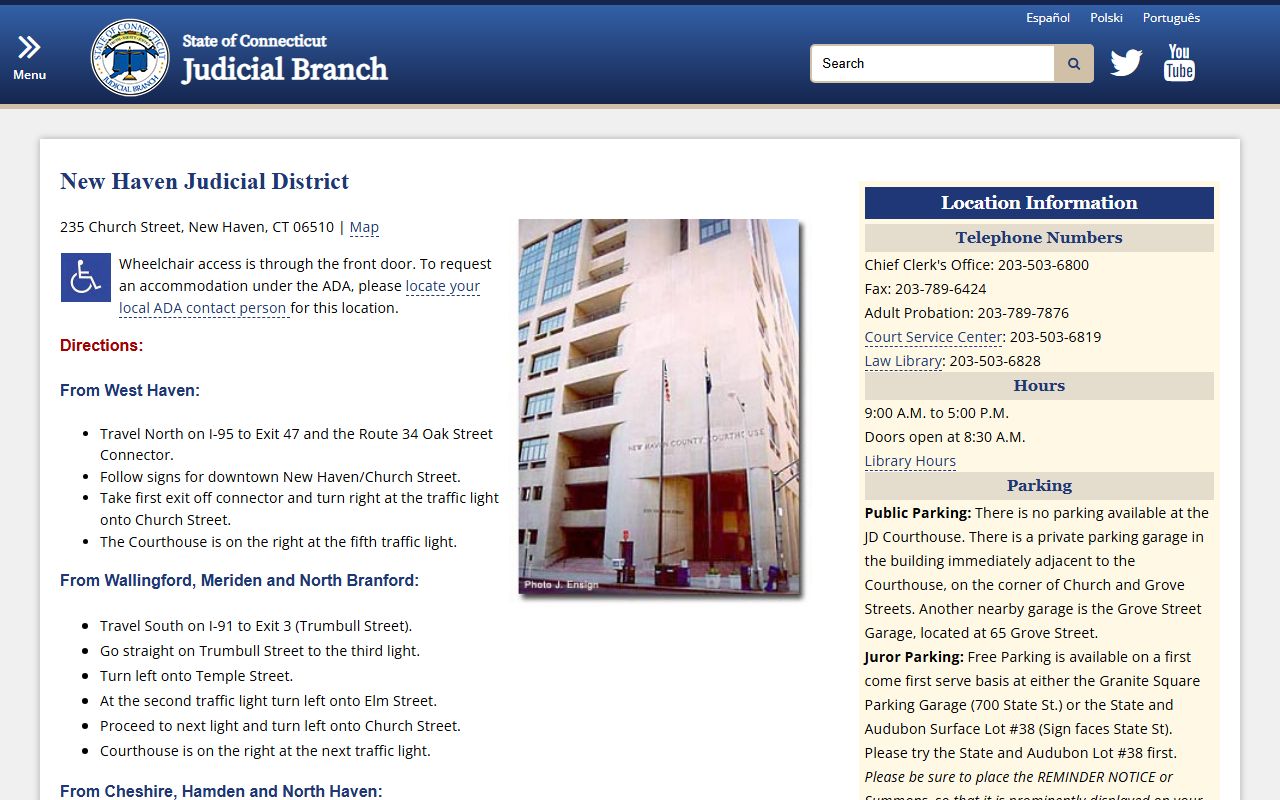
Civil and family cases from Branford get filed at New Haven Judicial District. The address is 235 Church Street, New Haven, CT 06510. Call the clerk at (203) 503-6800. This district covers New Haven and surrounding towns including Branford.
Connecticut has a state-run court system. All cases go through Superior Courts. There are no city courts in Branford. The state divides courts into 13 judicial districts and 17 geographical areas that serve different case types and towns.
Search Branford Court Cases Online
The Connecticut Judicial Branch runs a free case search at jud.ct.gov/lookup.htm. Pick which type of case you want to find. Civil, family, housing, and small claims go to civilinquiry.jud.ct.gov. Criminal and motor vehicle cases have their own search page.
Enter a last name or docket number. Add a first name to get fewer results. Choose New Haven as the judicial district if you know where the case was filed. Results show parties, case numbers, and filing dates. Click a case to see the docket with all court events listed by date.
The system updates nightly. New filings appear by the next business day. Very old cases may not be in the database. Call the courthouse if you cannot find what you need.
Some records do not appear online. Juvenile cases are confidential under Connecticut General Statutes Section 46b-124. Youthful offender files stay sealed. Criminal dismissals and acquittals become non-disclosable 20 days after the court rules per Connecticut General Statutes Section 54-142a. After 20 days, clerks cannot acknowledge those cases existed. Nolle prosequi records are visible for 13 months.
Note: Online searches show summaries but you may need to visit the courthouse for full files.
How to Get Copies from Branford Cases
Visit the courthouse where your case is filed. The clerk's office pulls files and makes copies. Copy fees are one dollar per page for court records. Certified copies may have additional fees. You can request copies by mail if you include payment.
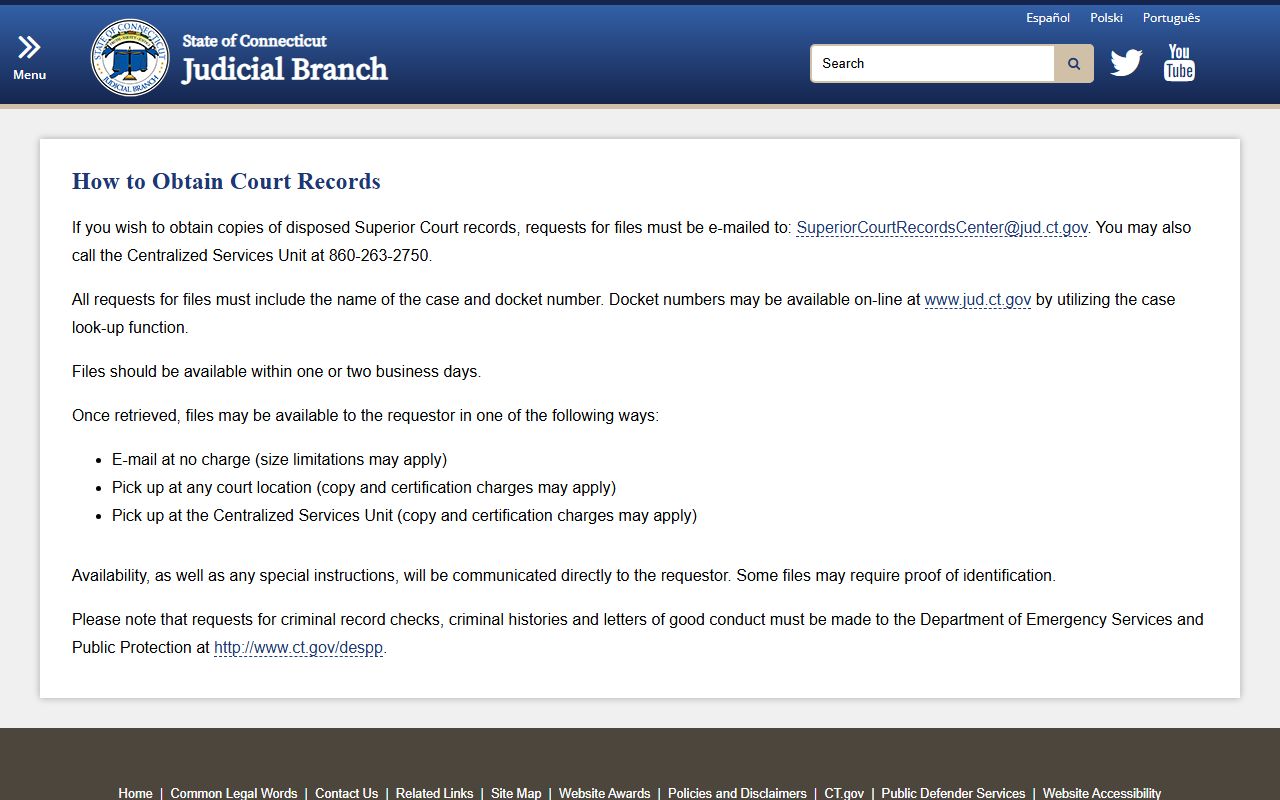
For disposed cases no longer at the courthouse, email the Centralized Services Unit at SuperiorCourtRecordsCenter@jud.ct.gov. Include the case name and docket number in your message. Files should be ready within one or two business days. They email small files free. Larger files need to be picked up at a court location. Some files require ID to access.
Court transcripts are ordered separately. Lawyers use the eServices portal at eservices.jud.ct.gov. Others fill out a transcript order form and give it to the Court Reporter's Office in the judicial district where the hearing took place. Transcript fees depend on length and how fast you need them.
The Judicial Branch explains how to get records at jud.ct.gov/courtRecords.htm. This page covers what info you need and how the request process works for Branford court records.
Branford Court Case Types
Connecticut Superior Courts handle all trial cases. Civil matters include lawsuits for money, contract fights, and property disputes. Records show the complaint, answer, motions, orders, and final judgment. Criminal files list charges, pleas, trial outcomes, and sentences. Family cases involve divorce, custody, support, and protective orders. Housing session covers evictions and landlord issues. Small claims court handles smaller money disputes.
Every case has a docket sheet. The docket tracks each event with dates and short notes. Complaints start civil cases. Informations or warrants start criminal cases. Motions ask the judge to take action. Court orders respond to motions. Final judgments close cases.
Public access varies by record type. Most civil and criminal files are open. Pre-sentence reports are confidential per Connecticut General Statutes Section 54-91b. Family case evaluations stay closed except to parties under Practice Book rules. Search warrants become public after execution under Connecticut General Statutes Section 54-33c.
Judges can seal files when good cause exists. A party files a motion and the court holds a hearing. The judge decides if public access would cause specific harm. Sealing is rare. Courts favor transparency unless strong reasons support closure.
Legal Assistance for Branford Residents
Free legal aid is available for qualifying residents. Statewide Legal Services of Connecticut helps low-income people. They handle civil cases like housing, family law, and benefits. Call to see if you meet income requirements. Their website is slsct.org. They do not handle criminal matters.
The Connecticut Bar Association runs a lawyer referral service. They match you with attorneys in your practice area. Private lawyers charge fees. Ask about costs before hiring. Some offer flat fees or payment plans.
Branford Town Clerk's office is at 1019 Main Street. Call (203) 488-8391. The town clerk keeps land records and vital records. They do not handle court cases but maintain other public records for Branford.
Branford Police Department handles police reports. Call (203) 481-4241 for records. Police reports cover incidents, accidents, and arrests. These are separate from court files. Copy fees apply. Some reports may be restricted if cases are pending.
Connecticut Court Rules
The Connecticut Practice Book contains all court rules. It covers how to file, serve papers, and appear at hearings. Clerks explain filing rules but do not give legal advice. They tell you what forms to use. They cannot advise on how to handle your case.
Free court forms are at jud.ct.gov/webforms. Download the form for your case type. Fill it out and file it with the right court. Many forms include instructions.
Self-help guides are at jud.ct.gov/selfhelp.htm. These guides use plain language to explain court processes. They cover small claims, family matters, and housing cases. No legal jargon.
Filing fees vary by case type. Ask the clerk for current amounts. Fee waivers are available if you cannot afford fees. Application forms are at the courthouse or online. The court decides whether to grant waivers.
Public Access to Court Records
Connecticut court records are generally public. The Practice Book and state statutes control access. You need not be a party to view files. You need not explain why you want records. Courts allow inspection during business hours.
Some records have restricted access. Juvenile files are confidential per Connecticut General Statutes Section 46b-124. Youthful offender records stay sealed unless the person is found ineligible. Sexual assault victim identities are protected under Connecticut General Statutes Section 54-86e.
Criminal erasure laws affect what records are available. After set times, certain criminal records become non-disclosable. Clerks cannot confirm erased cases exist. This gives people a fresh start after dismissals or acquittals.
Connecticut's Freedom of Information Act applies to Judicial Branch administrative work. FOIA does not control access to court files. Court records follow separate rules. Contact the clerk's office with access questions.
More Branford Court Information
The Connecticut Judicial Branch keeps a courthouse directory at jud.ct.gov/directory/courthouses.htm. This page has addresses, phone numbers, and directions. It shows which towns each court serves.
For case questions, call the clerk's office in New Haven. Have your docket number ready. Clerks can tell you case status and upcoming dates. Court hours are weekdays during business hours but call ahead.
Connecticut Judicial Branch Law Libraries offer research help. These libraries are at courthouses statewide. Staff help you find statutes, cases, and rules. You do not need a law degree. They are open to all. Check the Judicial Branch site for locations and hours.
Court Records in Nearby New Haven County Cities
Other New Haven County cities file cases in Connecticut Superior Courts.