
Search Connecticut Court Records
Connecticut court records include civil cases, criminal filings, family matters, and housing disputes heard in Superior Courts across the state. The Connecticut Judicial Branch runs a unified court system that serves all eight counties. You can search court records online through the state case lookup portal or visit any courthouse in Connecticut to request copies of case files and dockets. Most court records are open to the public and can be accessed by anyone who needs them.
Connecticut Court System Facts
Online Court Record Access in Connecticut
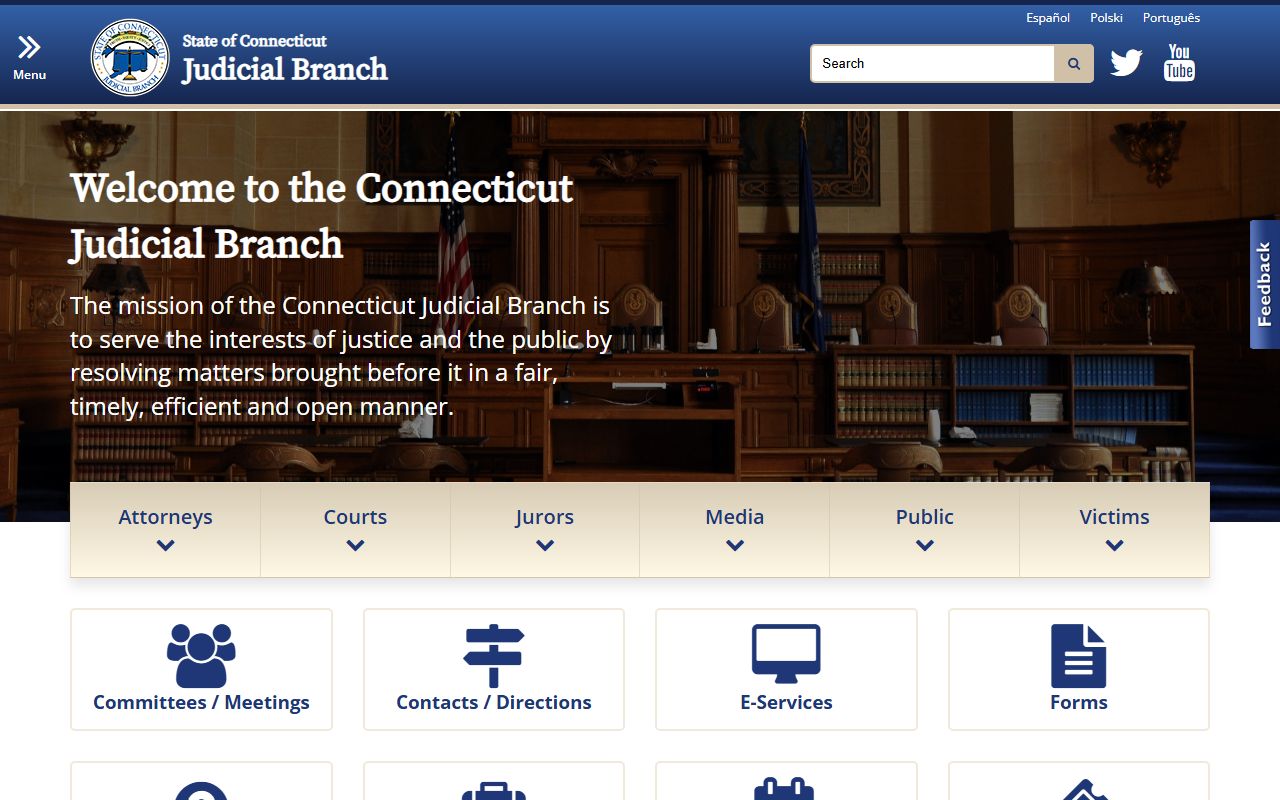
The Connecticut Judicial Branch runs a free case lookup tool for all court records in the state. This online system covers civil cases, criminal matters, family law, housing disputes, and small claims. You can search by name or case number. The system updates each night with data from the day before. Go to the main lookup page to pick which court type you need.
Civil and family court records go back many years in Connecticut. The criminal lookup shows active cases and recent matters. Some older criminal records may not show up online. Supreme Court and Appellate Court cases filed after 1991 are in the system too. You can read briefs and other court papers for these cases on the Connecticut Judicial Branch site.
The state keeps disposed court records at a central unit in Wethersfield. If you need an old case file, send an email to the Centralized Services Unit. Include the case name and docket number in your request. Files should be ready in one or two days. They can email small files at no cost or you can pick up copies at any court location in Connecticut.
Court Record Types
Connecticut Superior Courts handle most legal matters in the state. Civil cases include lawsuits over money, property fights, and contract issues. These records show who filed the case, what they want, and how the judge ruled. Criminal records list charges, hearings, and final outcomes for people accused of crimes in Connecticut. Family court records cover divorce, child custody, and support matters. Housing cases deal with evictions and landlord disputes.
Each case file holds many types of court records. The complaint starts the case and tells what the person wants. The answer comes from the other side. Motions ask the judge to do things during the case. Orders show what the judge decided at each step. The final judgment or decree ends the case and states the court's ruling. Dockets list every event in a case with dates and brief notes about what took place in Connecticut courts.
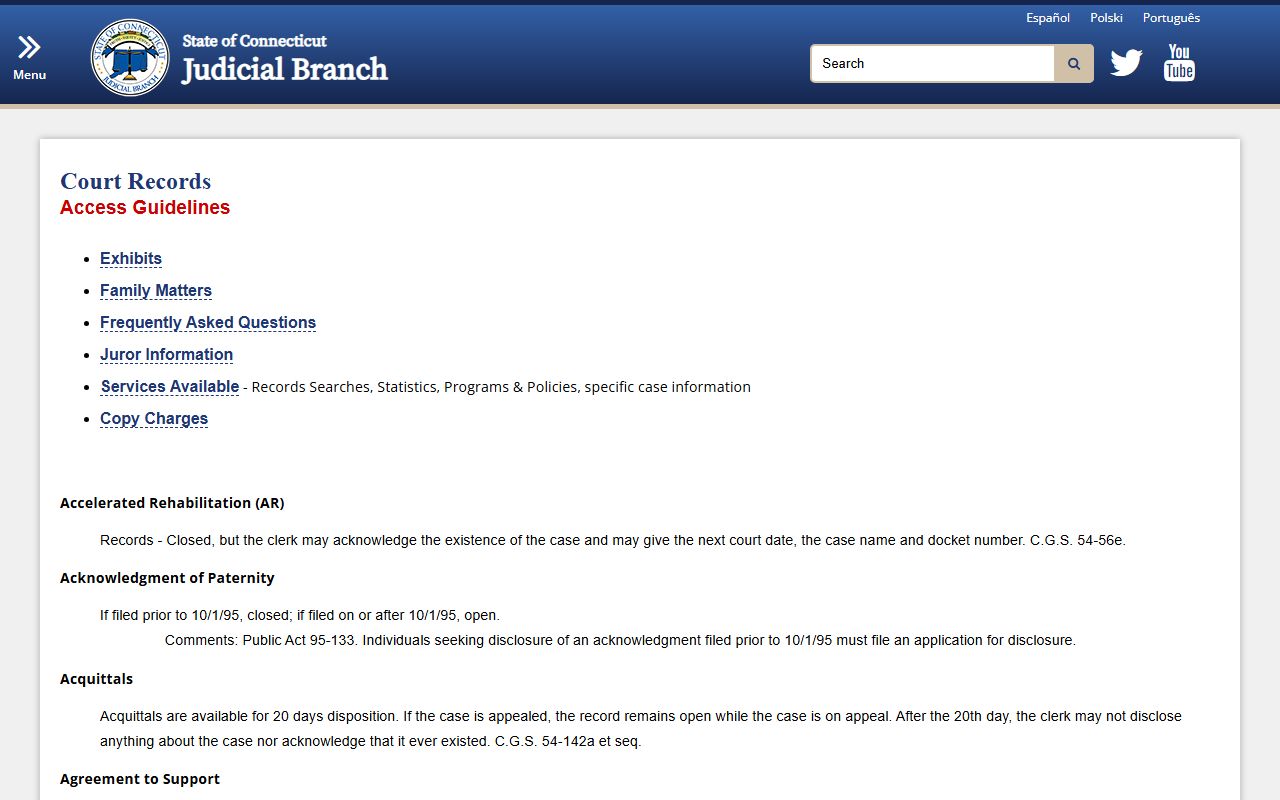
Some records stay confidential under Connecticut law. Juvenile matters are sealed from public view. Youthful offender files are closed too. Cases about family abuse may not show the names or locations of protected parties. Criminal records for acquittals and dismissals become non-disclosable after 20 days under state statute.
Note: You can see most case results online but may need to visit the courthouse to get full case files with all documents.
How to Look Up Cases
Start at the Connecticut Judicial Branch website. The lookup page has links for each court type. Click on civil, criminal, or family to search that category. Enter a last name or case number in the search box. You can add a first name to narrow results. Pick a judicial district if you know where the case was filed in Connecticut.
Results show basic case info like the parties, case number, and filing date. Click on a case to see more details. The docket page lists all court events with dates. Some case types let you view scanned documents right on the site. Criminal records may have limits on what shows based on the outcome and how much time has passed since the case closed.
If you cannot find a case online, call the courthouse. Court clerks can check their systems and tell you if records exist. They may charge fees to search and copy older files. The Centralized Services Unit in Wethersfield helps with disposed cases that no longer show up in local court systems across Connecticut.
Connecticut Judicial Districts
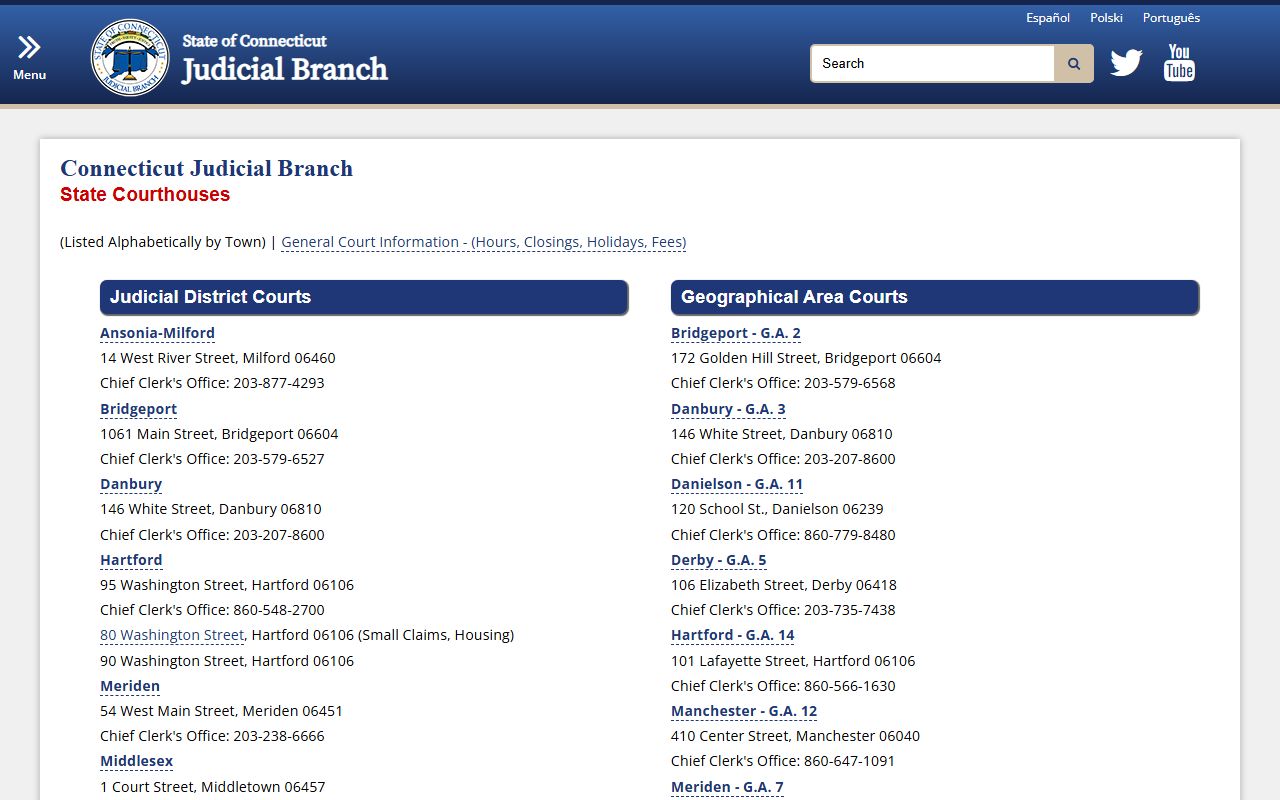
Connecticut divides its court system into 13 judicial districts and 17 geographical areas. Each district has a main courthouse that handles civil and family matters. Geographical areas have criminal courts. Some towns are served by more than one court location. Hartford Judicial District covers Hartford, Manchester, and East Hartford along with many other towns. New Haven Judicial District serves New Haven, Meriden, and surrounding areas. Fairfield County has three districts covering different regions of that county.
Cases get filed in the district where the person lives or where the event took place. For divorce, you file where either spouse lives. For a lawsuit, you file where the other party lives or where the problem happened. Criminal cases go to the court in the town where the alleged crime occurred. The Connecticut Practice Book sets rules for which court handles each type of case in the state.
You can find your judicial district on the Connecticut Judicial Branch site. The courthouse directory lists all locations with addresses and phone numbers. Each court has a clerk's office that helps with filing new cases and getting copies of existing records in Connecticut.
Getting Copies of Court Files
Visit the courthouse where your case was heard to get certified copies. The clerk's office can pull the file and make copies while you wait or you can come back later to pick them up. Copy fees in Connecticut are one dollar per page for court documents. Certified copies may cost more. Some courts let you order copies by mail if you send payment with your request.
For email delivery of disposed records, contact the Centralized Services Unit at SuperiorCourtRecordsCenter@jud.ct.gov. Include the case name and docket number. Small files can be emailed at no cost. Larger files need to be picked up at a court location. You may need to show ID to get some types of case files in Connecticut.
Connecticut court records in paper form date back many decades. Digital records are easier to access but may not go as far back. Older records might be stored in archives. Ask the clerk if you need records from cases filed long ago in the state.
Court transcripts must be ordered through the online transcript system in Connecticut. Attorneys use the eServices portal. Others can fill out a transcript order form and give it to the Court Reporter's Office in the judicial district where the hearing took place.
Court Records and Public Access
Most court records are open to anyone under Connecticut law. The Connecticut Practice Book and state statutes govern access to court files. You do not need to be a party in the case to see the records. You do not have to give a reason for your request. The court must let you inspect public records during business hours.
Some case types have restricted access. Juvenile records are confidential under Connecticut General Statutes Section 46b-124. Youthful offender records stay sealed unless the person is found ineligible for the program. Family cases about abuse or protective orders may hide identifying information to keep parties safe. Pre-sentence reports are closed under state law.
Criminal records for non-convictions have time limits for public access in Connecticut. Dismissals and acquittals are available for 20 days after the court enters its ruling. After that time passes, the clerk cannot acknowledge that the case ever existed. This rule comes from Connecticut General Statutes Section 54-142a. Nolle prosequi records stay available for 13 months from the date the nolle was entered.
Judges can seal case files in special situations. A party must file a motion asking the court to seal records. The judge holds a hearing and decides if there is good cause to keep the file closed. Sealed records are rare but do happen in cases with sensitive facts that could harm someone if made public in Connecticut.
Court Forms and E-Filing
Connecticut courts have moved many processes online. The eServices portal at the Connecticut Judicial Branch site lets attorneys and parties file documents in court cases. You need to register for an account first. Once set up, you can file pleadings, view case status, and get notices through the system. Not all case types use e-filing yet but most civil and family cases do in Connecticut.
Court forms are free on the Judicial Branch website. The forms section has templates for starting cases, filing motions, and other common court actions. Fill out forms carefully and file them with the correct court. Staff at the court clerk's office can tell you which forms you need but cannot give legal advice about your case in Connecticut.
Self-help resources are available for people handling cases without a lawyer. The Connecticut Judicial Branch has guides on its site that explain court processes in plain terms. These guides walk you through steps for common case types like small claims or family matters.
Getting Legal Help
Many people handle court cases on their own in Connecticut. For those who need help, legal aid groups offer services at no cost to people with low income. Statewide Legal Services of Connecticut provides advice and representation in civil matters. They focus on issues like housing, family law, and public benefits. Call them to see if you qualify for their help.
The Connecticut Bar Association runs a lawyer referral program. They can connect you with an attorney who handles your type of case. Private lawyers charge fees for their work. Ask about costs before you hire someone. Some lawyers offer payment plans or reduced rates based on what you can afford.
Law school clinics give free help with certain case types too. Check with law schools in Connecticut to see what clinics they run. Student lawyers work under the watch of experienced attorneys to help people in the community.
More Connecticut Court Resources
The Connecticut Law Library has resources for legal research. Their website offers guides on finding laws and court rules. Staff can help you locate statutes and cases if you visit in person. Access to legal materials helps people understand their rights and court processes in the state.
Local bar associations in each county often have programs to help the public. Some run free legal clinics or workshops on common legal topics. Check with your county bar to see what they offer. Connecticut towns may have community groups that assist with legal issues too.
For questions about court procedures, call the clerk's office at your courthouse. They can explain filing rules and deadlines. Court staff cannot tell you what to do in your case but they can clarify how the court system works in Connecticut.
Browse Connecticut Court Records by County
Each of Connecticut's eight counties is served by one or more judicial districts. Click a county below to find court locations and contact details for that area.
View All 8 Connecticut Counties
Court Records in Major Connecticut Cities
Residents in Connecticut's larger cities file cases at their county Superior Courts. Select a city below for local court information and resources.