
New Haven County Court Records
New Haven County operates through several judicial districts that serve the entire county. The New Haven Judicial District handles civil and family cases for New Haven, Meriden, Hamden, and many other towns. Waterbury has its own judicial district that processes court records for the northwestern part of the county. The Ansonia-Milford Judicial District covers the southern region including West Haven and Milford. You can search court records online through the Connecticut Judicial Branch case lookup portal or visit a courthouse to get case files. Criminal cases go to geographical area courts in New Haven, Waterbury, Meriden, Milford, and Derby. Each court keeps dockets and files for all cases heard in that location.
New Haven County Court Facts
New Haven Judicial District
The main courthouse for New Haven sits at 235 Church Street in downtown New Haven. This district processes civil, family, housing, and small claims cases for 13 towns in the county. Call the clerk's office at (203) 503-6800 if you need to file a new case or get copies of existing court records. They can tell you what forms to use and how to submit documents to the court in New Haven County.
Most court records are public in Connecticut. You can view case files at the courthouse during business hours. Under Connecticut General Statutes Section 51-36a, the Judicial Branch must provide access to records maintained by the department. Civil case files open to public inspection as soon as the clerk time-stamps the documents. Family case files follow the same rule unless the court orders them sealed for good cause. The clerk's office makes copies for one dollar per page as set by state statute.
The Meriden courthouse at 54 West Main Street also hears civil and family cases for this district. Call their clerk at (203) 238-6666 for questions about cases filed in that location. Both courthouses serve the same towns but handle different case loads based on where people file their matters in New Haven County.
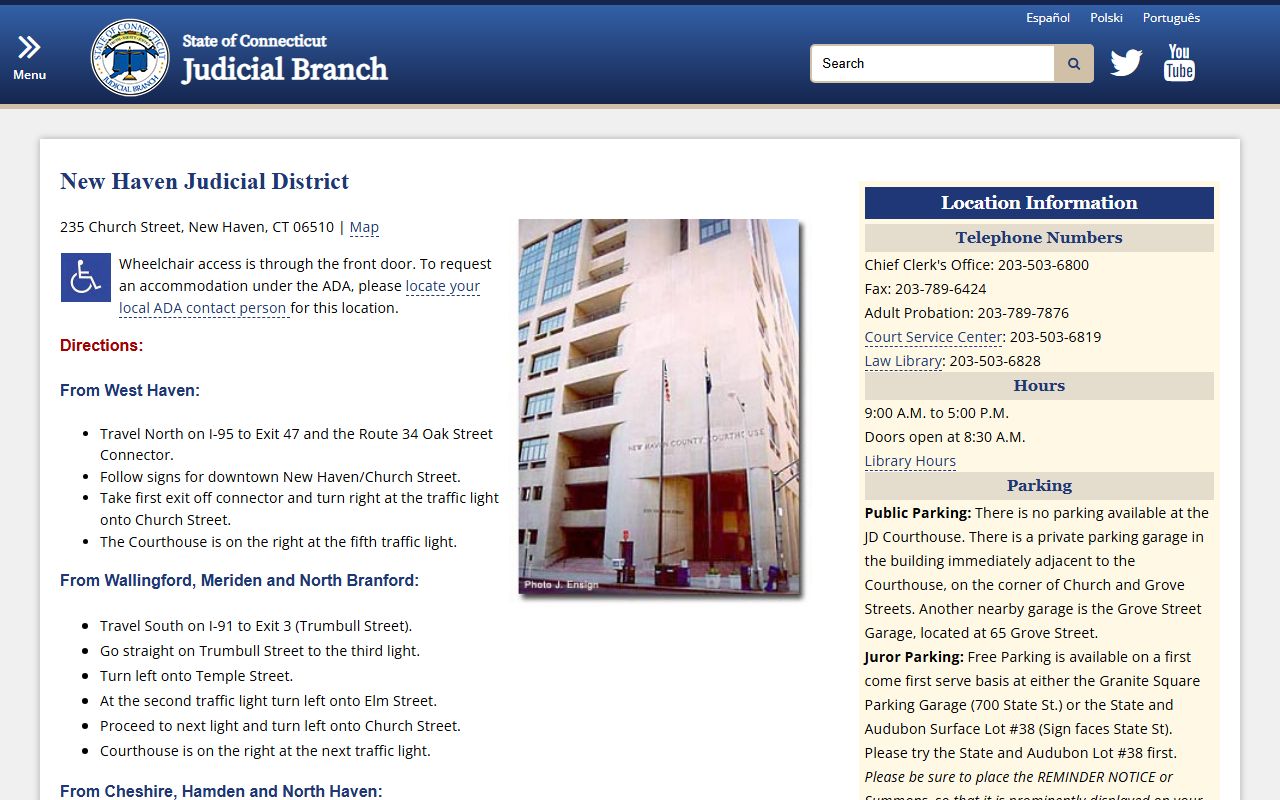
Towns served by New Haven Judicial District include New Haven, East Haven, North Haven, Hamden, Woodbridge, Bethany, Cheshire, Meriden, Wallingford, North Branford, Branford, Guilford, and Madison. Find where to file your case based on where you live or where the issue happened. The Connecticut Practice Book has rules about which court location handles each type of matter.
Waterbury District Court Records
Waterbury Judicial District operates from 300 and 400 Grand Street in Waterbury. The civil and family clerk can be reached at (203) 591-3300. This district covers eight towns in the western part of New Haven County. Court records here include lawsuits, divorces, child custody cases, and other legal matters heard in Waterbury courts.
Online access to Waterbury court records works through the same statewide system used for all Connecticut judicial districts. Go to https://civilinquiry.jud.ct.gov/ and search by name or docket number. The system shows basic case info and docket entries. You can see when hearings took place and what orders the judge signed. Some scanned documents might be available to view online depending on the case type and when it was filed in New Haven County.
Towns served by this district are Waterbury, Middlebury, Southbury, Woodbury, Watertown, Naugatuck, Prospect, and Wolcott. Cases get assigned to judges who hear matters in Waterbury. If you need records from an old disposed case, contact the Centralized Services Unit in Wethersfield by email at SuperiorCourtRecordsCenter@jud.ct.gov with the case name and docket number.
Note: Criminal cases in Waterbury go to Geographical Area No. 4 at 400 Grand Street with a separate clerk at (203) 236-8100.
Ansonia-Milford Judicial Records
The southern part of New Haven County files cases at the Ansonia-Milford Judicial District. This courthouse sits at 14 West River Street in Milford with a clerk's office phone number of (203) 877-4293. Nine towns use this court location for civil and family matters. Court records held here go back many years with both paper and digital files available for public inspection.
You can request copies of court documents by visiting the clerk's office in Milford. Bring the case number if you have it to help them locate the right file. Staff will pull the file and make copies while you wait or tell you when to come back if they need more time to prepare your order. Connecticut law requires copy fees of one dollar per page for court records as stated in Connecticut General Statutes Section 1-212.
This district serves Ansonia, Milford, Derby, Orange, Shelton, Oxford, Beacon Falls, Seymour, and West Haven. Each town has its own police department that handles local matters before cases reach Superior Court. If you need police reports or incident records, contact the police department in the town where the event took place in New Haven County.
Criminal Court Records in New Haven County
Five geographical areas handle criminal matters for New Haven County towns. GA No. 23 at 121 Elm Street in New Haven takes criminal cases for the eastern part of the county. Call them at (203) 789-7461 for questions about criminal dockets and court dates. GA No. 4 in Waterbury serves the northwestern towns. GA No. 7 in Meriden processes criminal cases for the central area. GA No. 5 in Derby covers the southern valley towns. GA No. 22 in Milford handles criminal matters for Milford and West Haven.
Criminal court records show charges filed against a person and what happened with each charge. The state files criminal cases when someone is accused of breaking a law. Records list the offense, court dates, motions, and final disposition. Many criminal records are public but some have limits on access based on the outcome and time that has passed since the case closed.
Connecticut General Statutes Section 54-142a governs erasure of criminal records. Dismissals and acquittals stay available for 20 days after disposition. After that period, the clerk cannot disclose the record or acknowledge it existed. Nolle prosequi records remain accessible for 13 months from the date entered. Convictions stay public with no time limit. Youthful offender records get sealed under Connecticut General Statutes Section 54-76c unless the person is found ineligible for that program.
Search criminal cases online through the criminal case lookup portal on the Connecticut Judicial Branch website. Enter the person's name and pick the geographical area if known. Results show active cases and recent matters. Older cases may not appear in the online system so you might need to call the courthouse to check if those records still exist in New Haven County.
How to Search for Cases
Start your search at the main Connecticut Judicial Branch website. The lookup page has separate links for civil cases, criminal matters, and appellate courts. Click the type you need. Type in a last name to begin your search. Add a first name to narrow the results down if the last name is common in New Haven County.
The system will show you a list of cases that match your search terms. Each entry has the case number, filing date, and party names. Click on a case to see the full docket with all events listed in order by date. Docket entries show motions filed, hearings held, and orders signed by the judge.
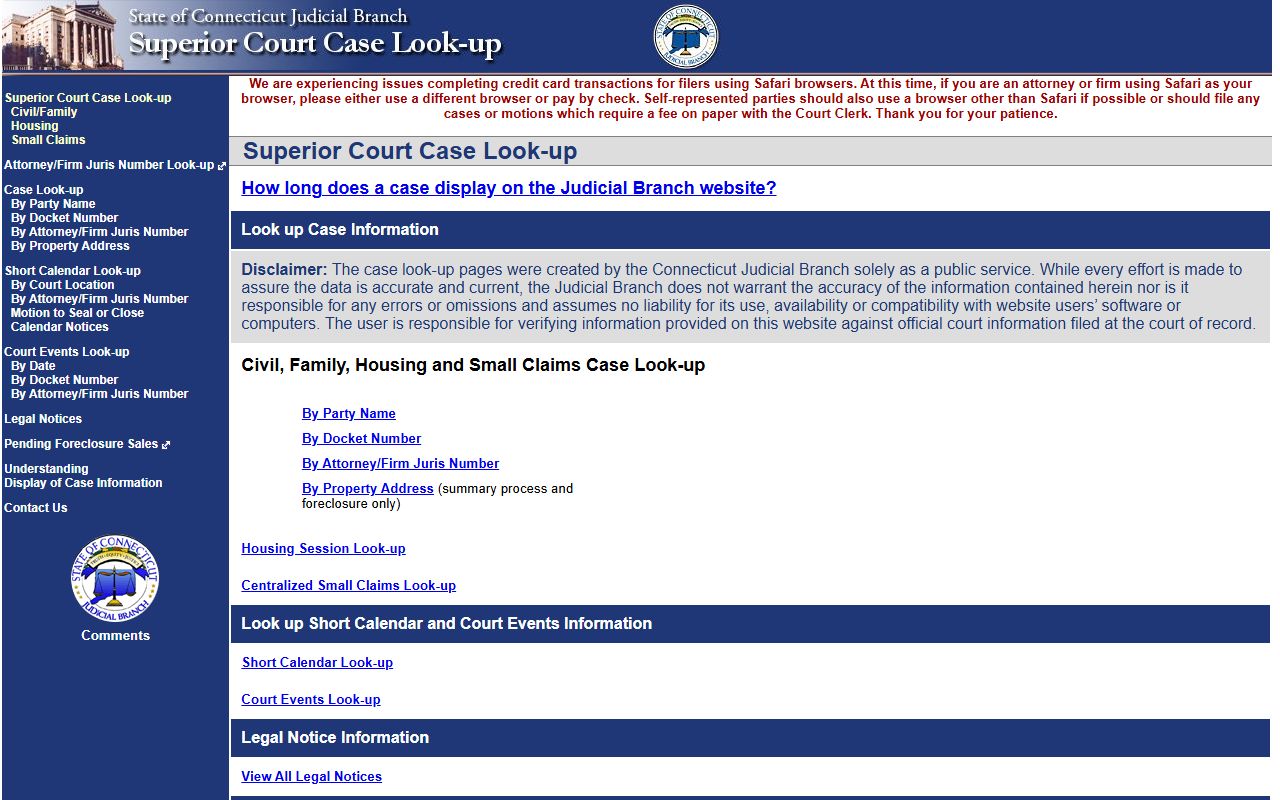
Some documents might be available to view as PDF files right on the website. The system does not have every paper from every case but major filings often get scanned into the online portal. If you need a document that is not online, visit the courthouse or email the Centralized Services Unit to request a copy of the file. Make sure you have the docket number when you ask for records from New Haven County courts.
The online system updates every night with data from the previous day. Very recent filings might not show up yet if you search early in the morning. Give the system time to process new entries before calling the courthouse to ask why something is not online from New Haven County.
Public Access to Court Files
Connecticut court records are generally open to the public. Anyone can request to see case files without giving a reason for the request. The Connecticut Practice Book and state statutes control how courts handle record requests. Most civil and criminal files can be inspected at the courthouse during business hours.
Some records stay confidential by law. Juvenile matters are closed under Connecticut General Statutes Section 46b-124. Family cases involving abuse or protection orders may hide party names and addresses to keep people safe. Pre-sentence investigation reports remain sealed as required by Connecticut General Statutes Section 54-91b. Medical records attached to court files might have restricted access to protect privacy in New Haven County.
Judges can seal files in special cases if a party files a motion and shows good cause. The court holds a hearing before deciding whether to keep records from public view. Sealed cases are rare. Most cases stay open even if they involve sensitive facts or personal matters. Connecticut law favors public access to court proceedings and records except where specific statutes require confidentiality.
Obtaining Copies of Documents
Visit the clerk's office at any New Haven County courthouse to get copies of court records. Tell the clerk which case you need and they will pull the file for you. They make copies while you wait if the file is thin. Thicker files might take longer so they may ask you to come back later that day or the next business day to pick up your order.
Copy fees are one dollar per page for court documents. Bring cash or check to pay for your copies. Some courts take credit cards but not all do so it helps to have other payment ready. Certified copies cost more than regular copies. Ask the clerk about certification if you need an official copy with a seal for legal purposes in New Haven County.
You can also request records by email for disposed cases. Send a message to SuperiorCourtRecordsCenter@jud.ct.gov with the case name and docket number. Include your contact info so they can reach you about the file. Small files might be emailed at no charge according to the policy stated on the Connecticut Judicial Branch records page. Larger files need to be picked up at a courthouse location.
Mail requests work too but take longer. Write to the courthouse where the case was heard. Include the case number, party names, and what documents you want. Send a check or money order for the copy fees. The clerk will mail copies back to you once they process your request. Allow extra time for mail requests to be filled and sent back to you in New Haven County.
Legal Resources in New Haven County
Statewide Legal Services of Connecticut helps people who cannot afford a lawyer. They handle civil matters like housing, family law, and public benefits. Their New Haven office can be contacted through the main number on the Connecticut Judicial Branch self-help page. Call to see if you qualify based on income and case type.
The Connecticut Bar Association runs a lawyer referral service. They match people with attorneys who practice in their area of need. Private lawyers charge fees so ask about costs before you hire someone. Some offer payment plans or lower rates if you have limited funds. New Haven County has many lawyers who handle different types of cases.
Court forms are free on the Connecticut Judicial Branch forms page. Download the forms you need and fill them out carefully. The clerk's office can tell you which forms are required for your case but cannot give legal advice about what to write or how to argue your matter. Self-help guides on the judicial website explain steps for common case types in plain language.
Major Cities in New Haven County
Several Connecticut cities with populations over 25,000 are located in New Haven County. These cities file court cases at the judicial districts described above. Police departments in each city maintain local records for incidents and arrests before cases reach Superior Court.
Nearby Connecticut Counties
New Haven County borders several other counties in Connecticut. Each has its own court system and judicial districts.