
Danbury Court Records Search
Danbury court records are managed by the Danbury Judicial District in Fairfield County. With a population of 88,692, Danbury is the seventh largest city in Connecticut. The Superior Court at 146 White Street handles all civil, criminal, family, and housing cases for Danbury residents. You can search court records through Connecticut's online case lookup system or visit the courthouse to request copies of specific documents. The clerk's office maintains all case files, dockets, and judgments for Danbury court proceedings and makes them available to the public according to Connecticut law.
Danbury Court Information
Danbury Superior Court
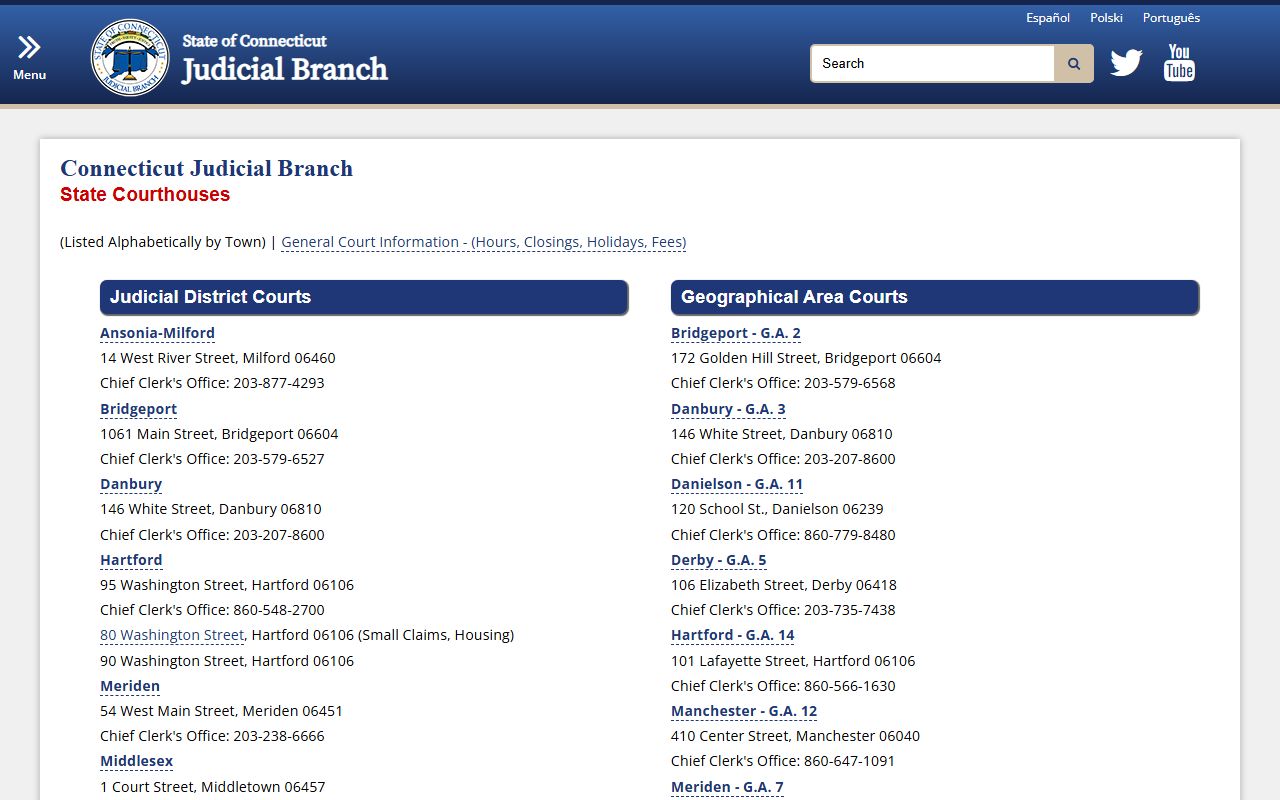
The Danbury Judicial District serves Danbury and several surrounding towns in northern Fairfield County. Civil and family cases are filed at 146 White Street. Criminal matters are also heard at the same location through Geographical Area No. 3. This court maintains records for all proceedings involving Danbury residents or events that occurred within the city. Most legal issues for people living in Danbury go through this courthouse.
Call the clerk's office at (203) 207-8600 with questions about Danbury court records. Staff can explain filing procedures and tell you how to get copies of case files. They cannot provide legal advice but they understand court rules and can guide you through the process. The courthouse operates Monday through Friday during standard business hours.
| Danbury Judicial District |
146 White Street Danbury, CT 06810 Phone: (203) 207-8600 Fax: (203) 207-8642 |
|---|---|
| Criminal Court (GA No. 3) |
146 White Street Danbury, CT 06810 Phone: (203) 207-8600 Fax: (203) 207-8666 |
| Towns Served | Danbury, Bethel, New Fairfield, Brookfield, Ridgefield, Redding, Sherman, Newtown |
Connecticut operates a unified court system, which means Danbury does not have separate city courts for most matters. Traffic violations, criminal charges, civil disputes, and family cases all go through Superior Court. Local ordinance violations may be handled through citation hearings under Connecticut General Statutes Section 7-152c, but these administrative proceedings are separate from the court system.
Search Danbury Court Records Online
Connecticut provides free online access to court records for all its judicial districts. Danbury cases are part of this statewide system. You can search by name, case number, or other identifying information. The database updates each night with data from the previous day, so very recent filings may not show up immediately. Civil and family records extend back many years while criminal records have restrictions based on case outcomes.
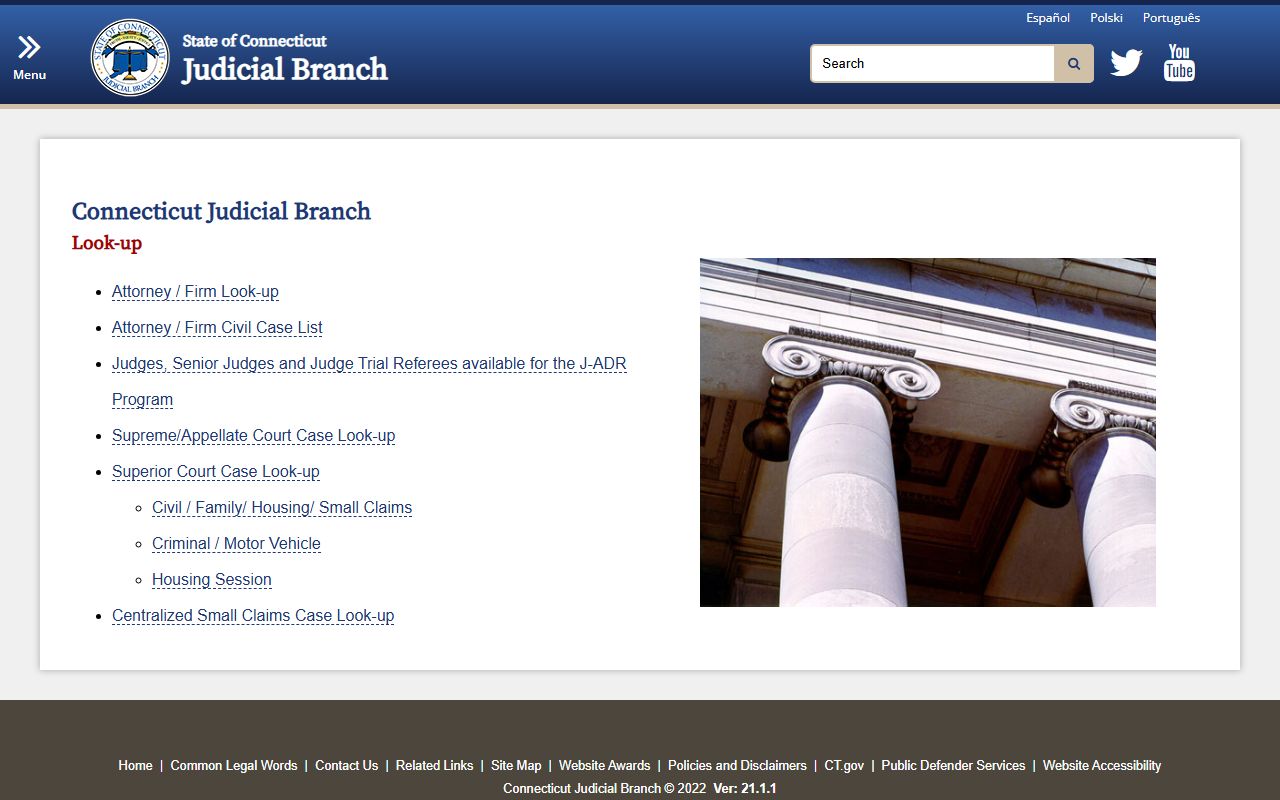
To search Danbury court records online, visit civilinquiry.jud.ct.gov for civil, family, housing, and small claims cases. Enter a last name in the search field. Add a first name to narrow your results. Select Danbury from the judicial district menu to limit searches to this area. Click on a case to view the complete docket with filing dates, court events, and current status.
Criminal and motor vehicle records use a different lookup tool at jud.ct.gov/lookup.htm. This system shows active cases and recent dispositions from Danbury courts. Older criminal records may not appear due to erasure requirements. Under Connecticut General Statutes Section 54-142a, dismissals and acquittals become non-disclosable 20 days after the court enters its decision. Nolle prosequi cases remain available for 13 months before erasure.
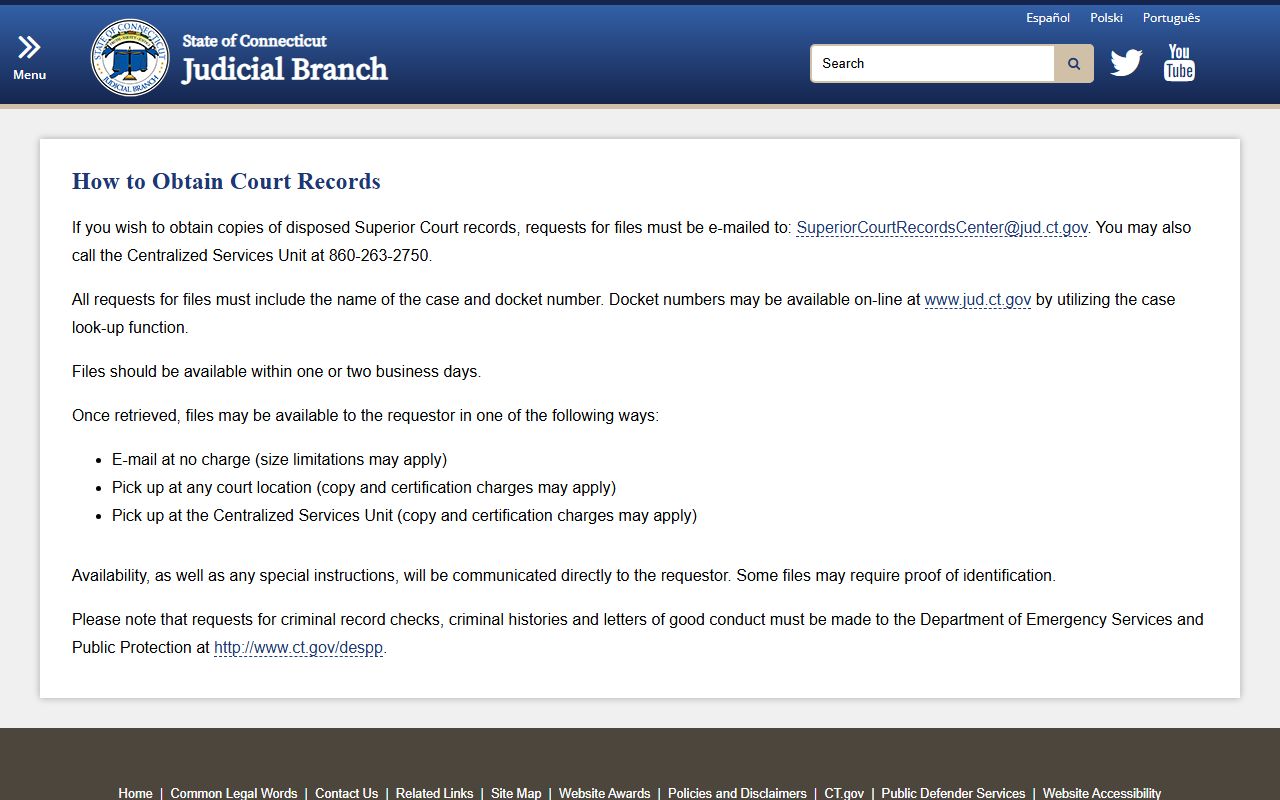
For disposed Danbury court records that no longer appear in the online system, contact the Centralized Services Unit at SuperiorCourtRecordsCenter@jud.ct.gov. Include the case name and docket number in your email request. Files should be ready within one or two business days. Small files can be emailed at no cost. Larger files must be picked up at a Connecticut courthouse location.
Obtain Copies of Danbury Court Files
Visit the courthouse at 146 White Street to get certified copies of Danbury court records. The clerk's office will locate the case file and make copies for you. Bring the case number if you have it, as this makes the search faster. Copy fees are one dollar per page for court documents in Connecticut. Certified copies cost more and require additional processing time.
You can order copies by mail if you send payment with your request. Make your check or money order payable to Clerk of Superior Court. Write down the case name, case number, and which documents you need. Include your contact information and mailing address. Mail requests take longer than in-person visits but work if you cannot get to the courthouse during business hours.
Some Danbury court records are confidential and cannot be released to the public. Juvenile cases stay sealed under Connecticut General Statutes Section 46b-124. Youthful offender records remain closed per Sections 54-76c and 54-76d. Family matters involving abuse or protective orders may have identifying information removed to protect victims. Pre-sentence reports are also confidential and not available for public inspection.
Court transcripts from Danbury proceedings must be ordered through the official transcript system. Attorneys use the eServices portal at eservices.jud.ct.gov to place orders online. Non-attorneys can fill out a transcript order form and submit it to the Court Reporter's Office at the Danbury Judicial District courthouse. Transcript fees depend on the length of the proceeding and turnaround time requested.
Legal Help for Danbury Residents
Many Danbury residents handle court cases without a lawyer. For those who need legal assistance, several options exist. Statewide Legal Services of Connecticut offers free legal aid to people with low income. They handle civil cases like housing, family law, and public benefits. Contact them to find out if you qualify for their services.
The Connecticut Bar Association runs a lawyer referral program that matches people with attorneys who handle specific case types. Private lawyers charge fees, so ask about costs during your initial consultation. Some attorneys offer payment plans or sliding scale fees based on income. Access the referral program through the Connecticut Bar Association website.
The Connecticut Judicial Branch has self-help guides at jud.ct.gov/selfhelp.htm that explain court procedures in plain language. These guides cover common case types like small claims, family matters, and housing disputes. They walk you through each step and identify which forms you need to file. Law school clinics in Connecticut may also offer free legal help for certain types of cases. Check with local law schools to see what programs they run.
For questions about Danbury court records or filing procedures, call the clerk's office at (203) 207-8600. Staff can explain court rules and filing deadlines but cannot provide legal advice about your specific case. The Connecticut Law Library has resources for legal research and can help you locate statutes and court rules.
Danbury Court Forms and Electronic Filing
Connecticut courts have implemented electronic filing for many case types. The eServices portal allows you to file documents online, check case status, and receive court notices electronically. Most civil and family cases in Danbury use e-filing. You need to register for an account before you can file electronically. Visit jud.ct.gov/external/super/E-Services/efile to create an account and learn about the system.
Free court forms are available on the Connecticut Judicial Branch website at jud.ct.gov/webforms. Download the forms you need for your case type. Fill them out completely and accurately. File them with the Danbury courthouse according to the instructions. The clerk can tell you which forms are required but cannot help you fill them out, as that would be legal advice.
The Connecticut Practice Book sets forth the rules for all court procedures. Read it online at jud.ct.gov/stat_rules_orders.htm. These rules explain how to file cases, serve documents on other parties, and follow proper procedures in Danbury court matters. Understanding the rules helps prevent delays and procedural errors in your case.
Court Records in Other Fairfield County Cities
Other major cities in Fairfield County use the same Superior Court system for case filings. Each city routes cases to its designated judicial district.