
Middletown Court Records Search
Court records from Middletown cases are handled through the Middlesex Judicial District in Connecticut. The main courthouse is located right in Middletown at 1 Court Street, making it convenient for local residents to file cases and attend hearings. This facility processes civil cases, family matters, housing disputes, and criminal cases for Middletown and surrounding towns in Middlesex County. Connecticut's unified court system allows residents to search court records online through a free state portal or request copies directly from the courthouse. All court records are maintained according to Connecticut statutes and court rules that govern public access.
Middletown Court System
Middlesex Judicial District
The Middlesex Judicial District courthouse sits at 1 Court Street in Middletown. This location handles all court types for the district. Civil and family cases are filed here with the clerk's office at (860) 343-6400. Criminal cases from Middletown and surrounding towns go to Geographical Area No. 9, which operates at the same Court Street address. The criminal clerk's office phone is (860) 343-6445.
The district serves 15 towns in Middlesex County including Middletown, Clinton, Cromwell, Durham, East Haddam, East Hampton, Essex, Haddam, Killingworth, Middlefield, Old Saybrook, Portland, and Westbrook. Where you file depends on where parties live or where events happened that led to the case.
Court hours are weekdays during normal business hours. Call ahead to confirm hours before visiting. Park in nearby public lots or street parking when you go to the courthouse.
Online Case Lookup for Middletown
Connecticut offers free online case searches at jud.ct.gov/lookup.htm. This tool covers all court types in the state. Pick civil, criminal, family, housing, or small claims from the menu. Enter a name or case number to find records.
Results display basic case details like parties, case numbers, filing dates, and status. Click on any case to view the docket sheet with all court events in chronological order. The system updates overnight with the previous day's information. Very recent filings may not appear yet.
You cannot view full case files online in most instances. The lookup shows what cases exist and provides docket summaries. To read actual court documents like complaints, motions, and orders, visit the courthouse or request copies from the clerk's office.
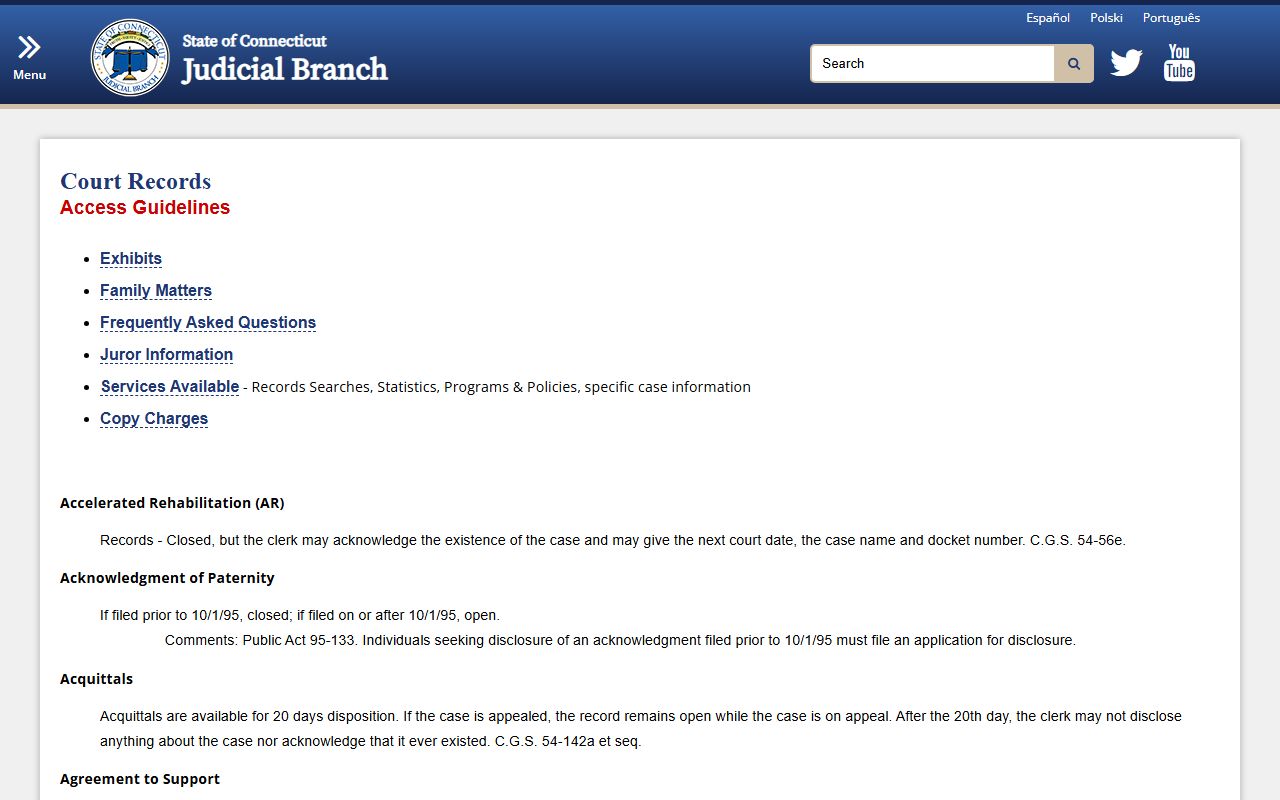
Some criminal records have access limits. Under Connecticut General Statutes Section 54-142a, dismissals and acquittals become non-disclosable 20 days after disposition. These records will not show in searches after the waiting period ends.
Requesting Court Record Copies
Visit the Middletown courthouse clerk's office to get copies of case files. Staff pull files and make copies while you wait or schedule pickup. Court records cost one dollar per page for regular copies. Certified copies have additional fees. Bring cash, check, or money order for payment. A case number helps speed up the process.
You can mail requests too. Write a letter with the case name, docket number, and which documents you need. Include payment for estimated copy costs. Mail to Middlesex Judicial District, 1 Court Street, Middletown, CT 06457. Some files require ID verification before staff will release copies.
For disposed cases not at the courthouse, email SuperiorCourtRecordsCenter@jud.ct.gov. Include case name and docket number. Files should be ready in one to two business days. The Centralized Services Unit sends small files by email at no cost or arranges pickup at a courthouse for larger files.
Note: Court transcripts must be ordered separately through the Court Reporter's Office or the online transcript ordering system.
Court Record Categories
Civil court records involve lawsuits between people or businesses in Middletown. Common cases include contract disputes, property claims, personal injury matters, and debt collection. Files contain complaints, answers, motions, discovery materials, and final judgments. Reading these documents shows what each side claimed and how the judge ruled.
Criminal records list charges against people accused of crimes. The file shows arrest information, charges filed, court dates, plea agreements, and sentences. Conviction records remain public indefinitely. Non-convictions get erased from public access after waiting periods set by state statute.
Family court handles divorce, child custody, support, and protection orders. Most family records are public but some stay confidential. Custody evaluations and certain sensitive documents do not get released under Connecticut law.
Housing cases deal with evictions and landlord-tenant disputes. Small claims cases are for smaller money amounts. Both appear in the civil case lookup on the state website.
Middletown Police Department Records
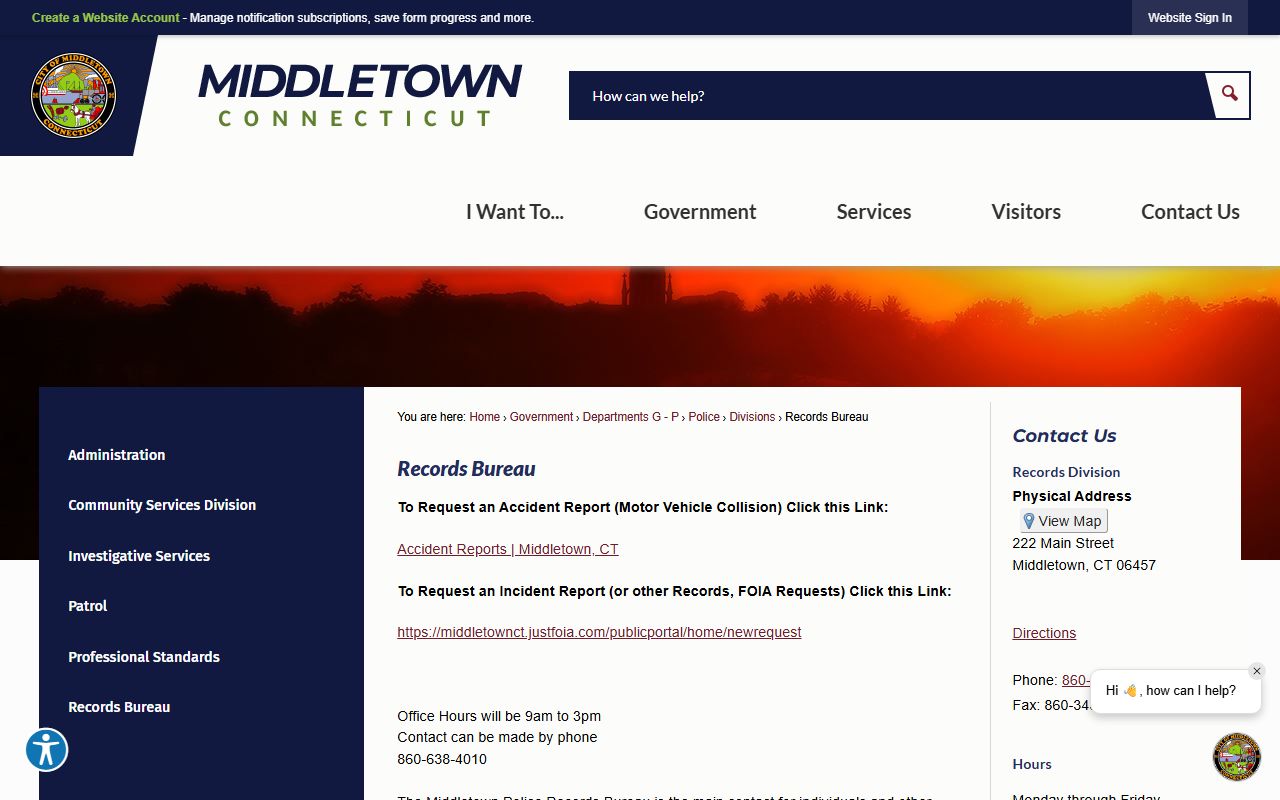
Police records are separate from court files. The Middletown Police Department Records Bureau maintains incident reports, arrest records, and accident reports. Contact the bureau at (860) 638-4000 to request police reports. Copies of certified police reports cost one dollar for the first page and 50 cents for each additional page. Non-certified copies are 50 cents per page. Body camera or dash camera footage on DVD costs five dollars. Mail requests have a two-dollar shipping charge.
Reports are usually available five to seven days after an incident. Police reports with pending criminal charges may not be released until the court case concludes. Juvenile records have restricted access. Criminal history checks showing Middletown arrests cost five dollars.
Public Access Under Connecticut Law
Most court records are open to anyone who requests them. You do not need to be a party in a case or explain why you want records. Connecticut Practice Book rules and state statutes govern access to court files. Anyone can inspect public records during courthouse business hours.
Some records stay confidential. Juvenile matters are sealed under Connecticut General Statutes Section 46b-124. Youthful offender files are closed unless the person is found ineligible. Family abuse cases may redact identifying information to protect victims. Pre-sentence reports and certain other documents are confidential by law.
Judges can seal files in rare situations. A party must file a motion and show good cause for sealing. The court holds a hearing before deciding. Sealed cases are uncommon but do occur when public access would cause serious harm.
Court Forms and Filing
Download free court forms at jud.ct.gov/webforms. The site has templates for starting cases, filing motions, and other legal actions. Pick forms that match your case type. Fill them out carefully before bringing them to the courthouse.
Connecticut courts use e-filing for many case types. The eServices portal at jud.ct.gov/external/super/E-Services/efile lets you file documents online. Register for an account to begin. Attorneys must use e-filing. Self-represented parties can choose electronic or paper filing.
Filing fees depend on case type. Ask the clerk's office about fees before you file. People with low income may qualify for fee waivers. Complete a waiver application and provide financial information. The court reviews requests and decides who can proceed without paying fees.
Legal Assistance Resources
Statewide Legal Services of Connecticut offers free legal help to eligible low-income residents. They handle civil matters like housing, family law, and public benefits. Call to check if you qualify. The Connecticut Bar Association runs a lawyer referral service that connects people with attorneys in their practice area.
Private lawyers charge fees for representation. Ask about costs during initial consultations. Some offer payment plans or reduced rates based on financial circumstances. Connecticut law schools operate legal clinics that provide free help with select case types under attorney supervision.
The Judicial Branch self-help section has guides for people representing themselves. These resources explain court procedures in plain terms. Court staff can answer questions about filing requirements and deadlines but cannot give legal advice about your specific case.
Middlesex County Court System
Middletown is the county seat of Middlesex County. The county has one judicial district based in Middletown that serves all 15 towns. This differs from larger counties that have multiple districts. Having the courthouse in Middletown makes it accessible to residents throughout the county.