
Find Stratford Court Records
Court records from Stratford cases are maintained through Connecticut Superior Court facilities in Fairfield County. Residents can search for civil filings, criminal matters, family court documents, and housing disputes. The state runs a unified court system that processes all legal matters for Stratford and surrounding towns. Online case lookup tools allow you to view docket information and basic case details from your home. Court records for Stratford residents are kept at the Bridgeport courthouse as well as the Geographical Area court on Golden Hill Street. You can request copies of case files in person or through the state records center in Wethersfield.
Stratford Court Information
Stratford Court Filing Locations
Stratford residents file court cases through Fairfield County Superior Courts. Civil and family matters go to the Fairfield Judicial District courthouse at 1061 Main Street in Bridgeport. Criminal cases are processed at Geographical Area No. 2, also located in Bridgeport at 172 Golden Hill Street. Both facilities serve Stratford along with several other towns in the county including Bridgeport, Easton, Fairfield, Monroe, and Trumbull.
The Fairfield Judicial District clerk's office can be reached at (203) 579-6527 for questions about civil and family court records. For criminal court matters, call the Geographical Area No. 2 clerk's office at (203) 579-6568. Cases get filed in the district where you live or where the legal matter occurred in Connecticut.
Court staff can tell you if a case exists and when hearings are scheduled. They help with filing new cases and getting copies of documents from existing files. The clerk's office handles payments for court fees and copy costs too.
Search Court Records Online
The Connecticut Judicial Branch offers free online case lookup for all court records in the state. Stratford residents can use this tool to find civil, criminal, and family cases. Go to civilinquiry.jud.ct.gov for civil, family, housing, and small claims searches. Criminal and motor vehicle cases have a separate lookup page on the Judicial Branch site.
Search by entering a person's name or a case number. The system shows basic case information like parties, filing dates, and case status. Click on a case to see the full docket with all court events listed by date. The online records update each night with data from the previous business day.
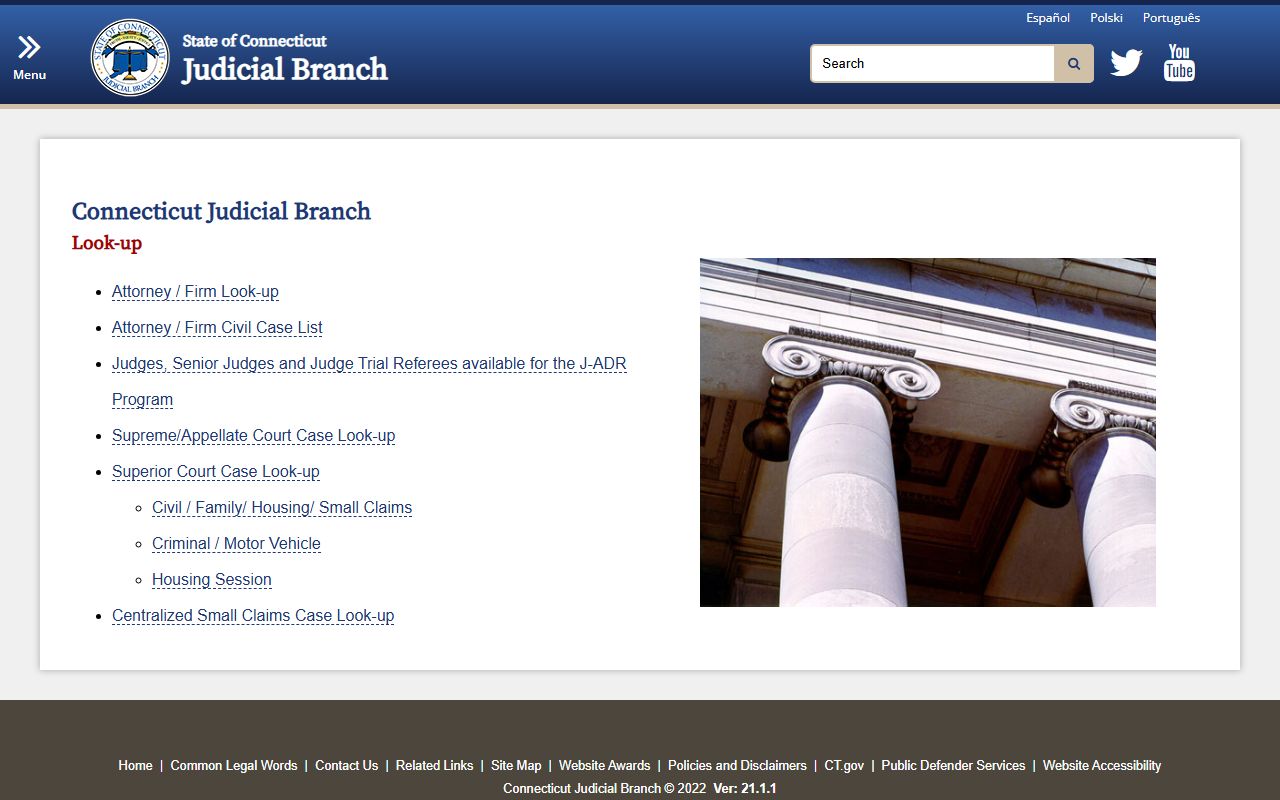
You cannot see complete case files online in most situations. The lookup shows you what cases exist and gives you docket sheets. To get copies of pleadings, motions, orders, and other court documents, you need to visit the courthouse or contact the records center.
Some criminal records have limits on what the public can see. Under Connecticut General Statutes Section 54-142a, dismissals and acquittals become non-disclosable 20 days after the court enters its decision. These records will not show up in searches after that time period passes.
How to Get Copies
Visit the Bridgeport courthouse to get certified copies of Stratford court records. The clerk's office pulls files and makes copies while you wait or sets up a time for you to come back. Court records cost one dollar per page to copy. Certified copies may have extra fees. Bring the case number if you have it to speed things up.
For disposed cases no longer at the courthouse, email the Centralized Services Unit at SuperiorCourtRecordsCenter@jud.ct.gov. Include the case name and docket number in your message. Files should be ready in one or two business days. Small files can be sent by email at no cost. Larger files need to be picked up at a court location.
You can mail requests to courthouses too. Send a letter with the case name, docket number, and what documents you need. Include a check or money order for copy fees payable to Treasurer, City of Bridgeport. Some files require you to show ID before staff will release copies.
Stratford Police Records
The Stratford Police Department keeps records of arrests, incidents, and accident reports separate from court files. Police records are public under state law but have different rules than court records. To get a police report, contact the Stratford Police Department at (203) 385-4100. Police headquarters is located in Stratford.
Police reports cost about 50 cents per page in most Connecticut towns. Reports with arrests may not be available until the criminal case is done. Juvenile reports and certain sensitive cases have restricted access. Allow at least five to seven days for reports to be ready after an incident occurs.
Note: Police records and court records are maintained by different agencies and must be requested separately.
Types of Stratford Court Records
Civil court records include lawsuits over money, property disputes, and contract problems. These files show who sued who and what they wanted. You can read complaints, answers, motions, and the judge's final order. Civil cases heard in Bridgeport cover matters from Stratford and nearby towns.
Criminal records list charges against people accused of crimes. The docket shows arrest dates, charges filed, court appearances, and final outcomes. Convictions are public records that stay available. Non-convictions like dismissals and acquittals have time limits under state statute before they get erased from public view.
Family court handles divorce, custody, child support, and related matters in Connecticut. Many family records are public but some details may be sealed to protect children or victims. The court restricts access to certain documents like custody evaluations and pre-sentence reports.
Housing cases involve evictions and landlord-tenant disputes. Small claims cases are for money disputes under a set dollar amount. Both types of cases can be searched through the civil case lookup system on the Connecticut Judicial Branch website.
Public Access Rules
Most court records are open to anyone who asks for them. You do not need to be involved in a case to see the file. Connecticut law allows public access to court records except in specific situations. The Connecticut Practice Book and state statutes set the rules for what records are public and what stays sealed.
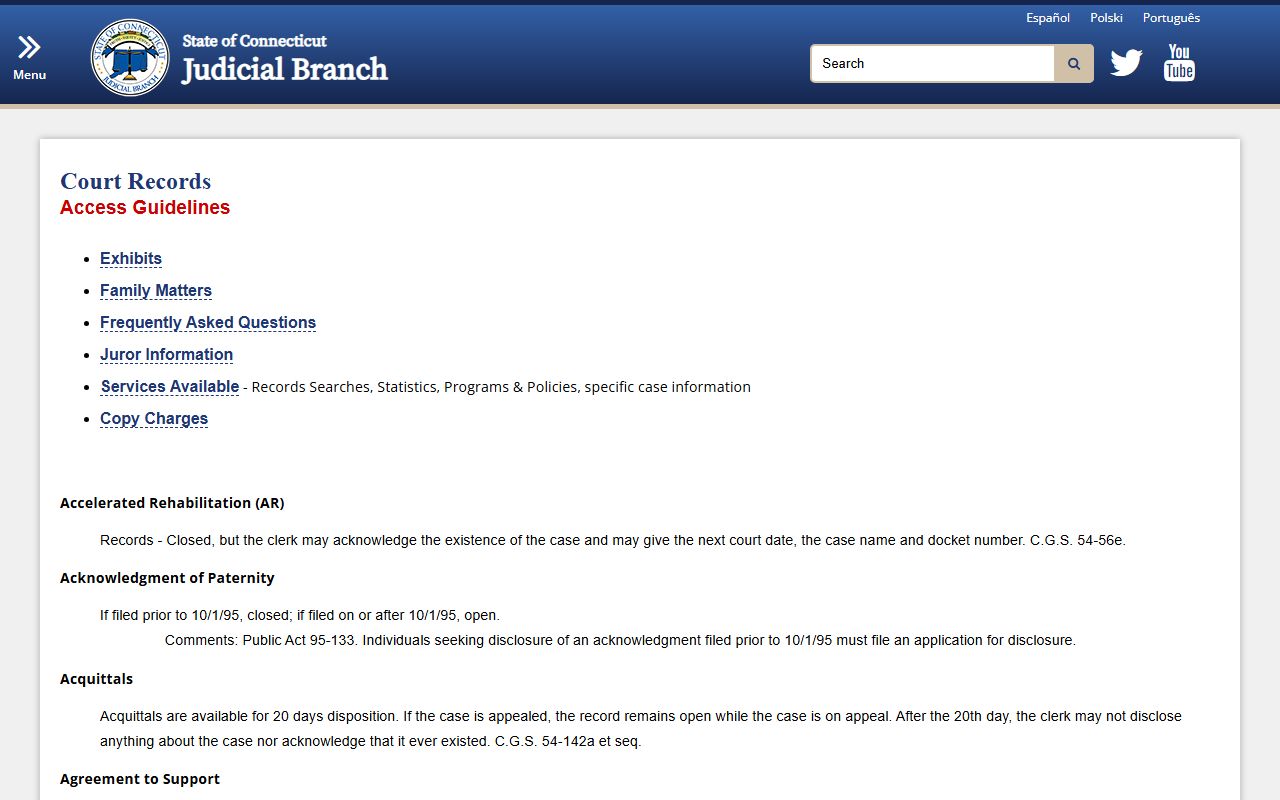
Juvenile records are confidential under Connecticut General Statutes Section 46b-124. The clerk cannot give out information about cases involving minors. Youthful offender files are sealed too unless the person is found ineligible for that program. These protections help keep young people's records private.
Family abuse cases may hide the names and locations of protected parties. This prevents abusers from using court records to find victims. Judges can also seal files in unusual cases where public access would cause harm. A party must ask the court to seal records and show good cause.
Court Forms for Stratford Residents
Get free court forms on the Connecticut Judicial Branch website at jud.ct.gov/webforms. Forms are available for starting cases, filing motions, and other common court actions. Fill them out completely before bringing them to the courthouse. The clerk's office can tell you which forms you need but cannot give legal advice about your case.
Many cases now use e-filing in Connecticut. The eServices portal lets you file documents online and view case status. You need to register for an account first. Attorneys must use e-filing for most case types. Self-represented parties can choose to e-file or bring papers to the courthouse in person.
Filing fees vary by case type. Ask the clerk's office about fees before you file. Some people qualify for fee waivers if they cannot afford to pay. Fill out a fee waiver form and provide information about your income. The court decides if you can proceed without paying the filing fee.
Getting Legal Assistance
Statewide Legal Services of Connecticut provides free legal help to people with low income. They handle civil matters like housing, family law, and public benefits. Call them to see if you qualify for their services. The Connecticut Bar Association runs a lawyer referral program that can connect you with an attorney who handles your type of case.
Private lawyers charge fees for their work. Ask about costs before you hire someone. Some attorneys offer payment plans or reduced rates based on what you can afford. Law school clinics at Connecticut universities may also provide free help with certain case types.
The self-help section on the Judicial Branch website has guides for people representing themselves. These guides explain court processes in plain language and walk you through steps for common case types. Court staff cannot give legal advice but they can clarify court procedures and filing rules.
Court Records in Nearby Cities
Other Fairfield County cities with court record resources include Bridgeport, Fairfield, and Shelton. Each city's residents file cases at the same Fairfield County courthouses. The Connecticut Judicial Branch serves all towns in the county through its unified court system.