
Search Greenwich Court Records
Greenwich court records are processed through the Stamford-Norwalk Judicial District, which handles civil and family cases for the town. Criminal matters from Greenwich go to Geographical Area No. 1 at the courthouse in Stamford. All case types can be searched online through the Connecticut Judicial Branch case lookup system. Residents need to know which court location handles their specific case type to file correctly or request records. The state runs a unified system where records from every town including Greenwich are searchable in one place at no charge.
Greenwich Court Information
Where Greenwich Cases Are Heard
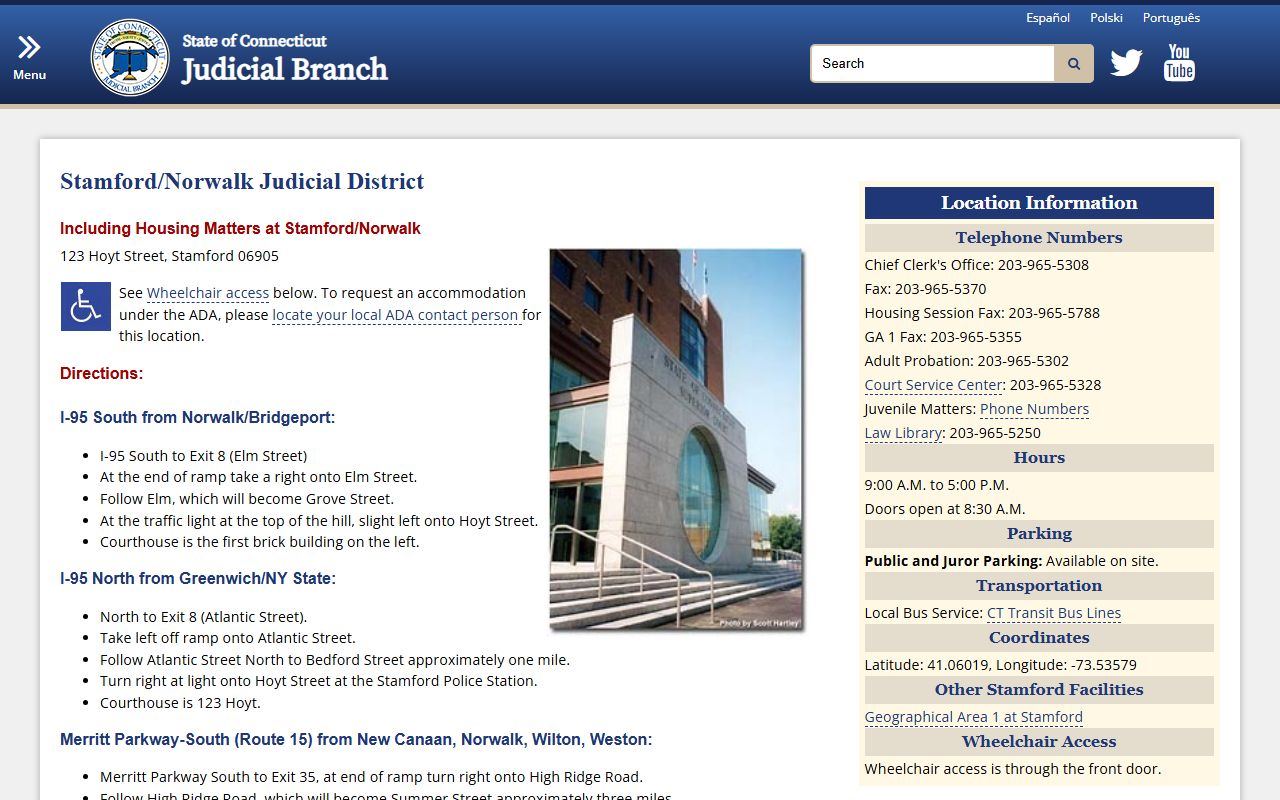
Greenwich is located in Fairfield County, which divides court functions among several judicial districts. The Stamford-Norwalk Judicial District at 123 Hoyt Street in Stamford handles civil and family cases for Greenwich residents. This includes divorce, custody, personal injury suits, and contract disputes. Their clerk's office can be reached at (203) 965-5308 for questions about filing or getting records.
Criminal cases and motor vehicle charges from Greenwich are heard at Geographical Area No. 1, also located at 123 Hoyt Street in Stamford. Call their clerk at (203) 965-5208. Court assignments depend on where the alleged offense took place. Greenwich Police Department arrests usually get processed through this court location.
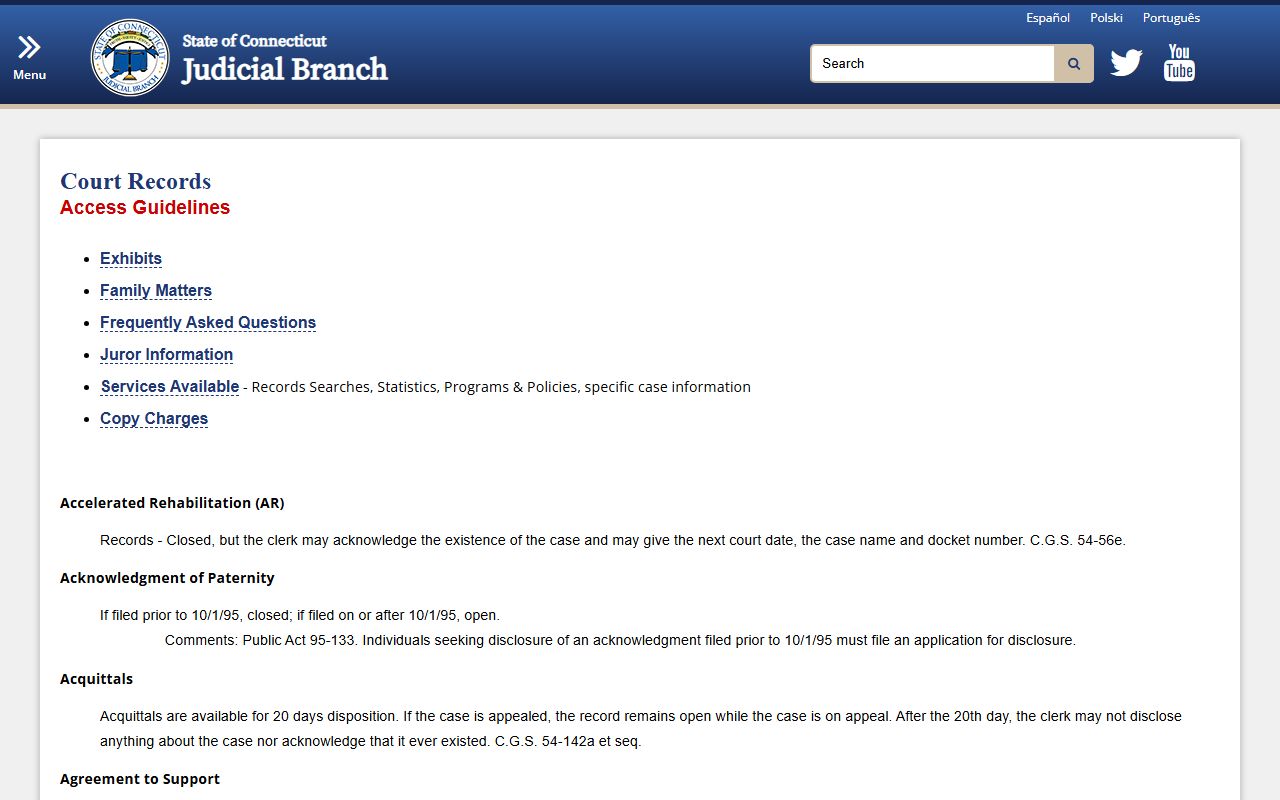
Most court records become public as soon as they are filed. Civil case files are open under Connecticut law unless a judge orders them sealed. Criminal records have time limits for access. Non-convictions like dismissals and acquittals stay available for 20 days after the court enters its ruling, then they become non-disclosable under Connecticut General Statutes Section 54-142a. This protects people who were not convicted from having old charges follow them.
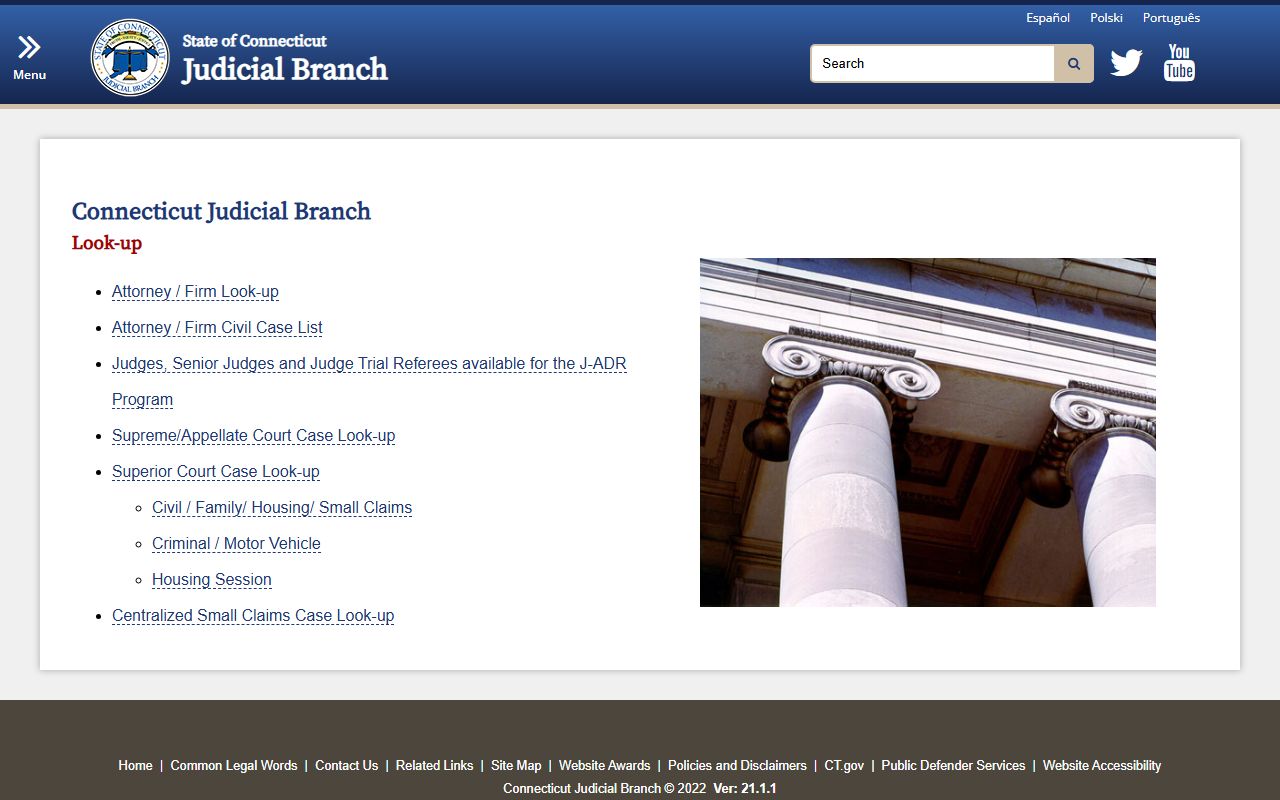
Greenwich residents can search for cases online without going to the courthouse. The civil case lookup portal covers family, housing, and small claims statewide. Type in a name or docket number. Results show parties, filing dates, and case status. The system updates daily so information from yesterday's court session should appear by the next day in Connecticut.
How to Look Up Cases
Go to the Connecticut Judicial Branch website. The lookup page has tools for different case types. Click on civil, criminal, or housing based on what you need. Enter a last name in the search box. Adding a first name helps narrow results if the last name is common. Pick Stamford-Norwalk Judicial District from the menu to focus on Greenwich area cases.
Results list matching cases with basic details. Click a case number to see the full docket. Every hearing, filing, and court order shows up with a date and brief note. Some case types let you view documents online. Appellate briefs and rulings are often available as PDF files on the site. Trial court documents usually require a visit to the clerk's office in Stamford.
For old or closed cases, contact the Centralized Services Unit by email at SuperiorCourtRecordsCenter@jud.ct.gov. Include case name and docket number. They retrieve disposed records from central storage. Files should be ready in one or two days. Small files can be emailed for free. Larger ones must be picked up at a Connecticut courthouse of your choice.
Note: Police records and court records are separate. Contact the Greenwich Police Department for incident reports.
Types of Court Cases
Civil cases involve disputes between parties. Common types are breach of contract, personal injury, and property fights. Case files show the complaint, answer, motions, and final judgment. Judges may issue temporary orders during the case. The final ruling tells who won and what relief was granted. These records are open to anyone in Connecticut under state access rules.
Family law matters include divorce, child custody, support, and restraining orders. Divorce records list grounds for dissolution, how property was divided, and custody arrangements for children. Some family case documents are restricted. Evaluation reports and certain filings may be closed to protect privacy according to Connecticut Practice Book rules. Parties can see these but the general public cannot without court permission.
Criminal records show charges filed by the state. These range from minor violations to serious felonies. The file lists charges, how the defendant pleaded, and the outcome. Convictions stay in the public record. Non-convictions have limited availability. Nolle prosequi entries are available for 13 months, then sealed by statute. Youthful offender cases are confidential under Connecticut General Statutes Sections 54-76c and 54-76d.
Housing cases deal with evictions and landlord-tenant disputes. Small claims cases handle disputes up to the limit set by law. These cases move faster than regular civil suits and have simpler procedures for people without lawyers in Connecticut courts.
Getting Copies of Court Files
Visit the courthouse in Stamford where Greenwich cases are filed. The clerk's office can locate the file and make copies. Court records cost one dollar per page. Certified copies may cost more if you need them for official use. Ask which type you need when you request records. Some situations like appeals require certified copies.
Mail requests are also accepted. Write a letter with the case name and docket number. Enclose a check for estimated copy fees made payable to Clerk of Superior Court. Allow a few days for processing. Calling ahead helps you get a page count so you send the right amount.
For disposed cases not at the local courthouse, the Centralized Services Unit retrieves them from storage. Email your request with case details. They respond within one or two business days. Files under a certain size can be emailed at no charge. Bigger files must be picked up in person. Some cases require ID to protect confidential information in Connecticut.
Legal Assistance for Greenwich Residents
Statewide Legal Services of Connecticut provides free legal help to low-income residents. They handle civil matters including housing, family law, and consumer problems. Call to see if you qualify based on income. Their attorneys can advise you or represent you in court. Many people use this service when they cannot afford a private lawyer in Connecticut.
The Connecticut Bar Association has a lawyer referral service. They match you with an attorney who handles your type of case. Private lawyers charge fees. Ask about their rates during the first meeting. Some offer payment plans or reduced fees based on what you can pay. Legal help can make a difference in complex cases.
Greenwich residents can use self-help resources from the Connecticut Judicial Branch. These guides explain how to handle common case types on your own. Court forms are free online. Download what you need and fill them out carefully. The clerk can tell you which forms to use but cannot give legal advice about your specific situation in court.
Local bar associations and community groups sometimes offer free legal clinics. Check with the Fairfield County Bar Association for programs in your area. Law school clinics may also help with certain matters under faculty supervision at Connecticut law schools.
Town and Police Records
The Greenwich Police Department keeps incident and accident reports separate from court files. Their records division can be reached at (203) 622-8000. Most departments charge about 50 cents per page for copies. Reports are usually available within a week of the incident. Some may take longer if an investigation is active or if the case involves arrests that have not been adjudicated yet.
The Greenwich Town Clerk maintains land records, vital statistics, and local ordinances. Call (203) 622-7891 for information. Land records include deeds, mortgages, liens, and other property documents. Many Connecticut towns now offer online access to land records. Ask the clerk how to search their database or visit the office in person to review records.
Local ordinance violations may be handled through citation hearing officers or Superior Court. Connecticut General Statutes Section 51-164p governs how these violations are processed when fines fall within certain ranges. Some towns have their own hearing procedures for local violations instead of using state courts.
More Resources
Court forms can be downloaded from the Connecticut Judicial Branch forms page. Fill them out and file with the correct court. Some case types require e-filing through the eServices portal. Attorneys and registered parties can submit documents online for most civil and family cases in Connecticut.
The Connecticut Law Library offers legal research help. Their staff can show you how to find statutes and case law. Understanding the law helps you know what to expect in your case. Many people research before hiring a lawyer or going to court.
For procedural questions, call the clerk's office at the Stamford courthouse. They can explain filing fees, deadlines, and other practical matters. Court staff cannot tell you what to do in your case but they can clarify how Connecticut court processes work.
Other Connecticut Cities
Nearby towns and cities also use Fairfield County courts. Check these pages for area-specific information.